Journal
Thailand: When Tradition Meets Tropical Modernism
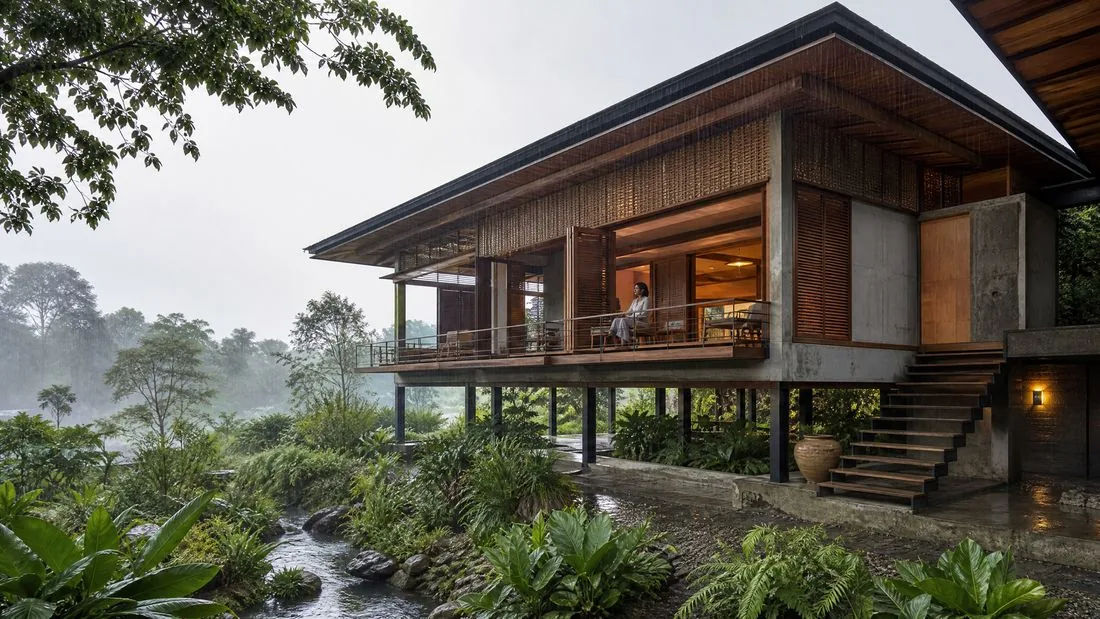
Contemporary Thai architecture is going through a period of synthesis between vernacular heritage and modern climate demands. Rather than an imported aesthetic, the "tropical modernism" now dominating the local scene is a genuine engineering of comfort.
Tropical modernism: a response to climate urgency
This approach revives old principles: raising buildings on stilts, which protects against monsoon flooding while encouraging natural ventilation beneath the living floor, or wide roof overhangs that shade façades without relying on air conditioning. Firms such as IDIN Architects have made this a founding principle: integrating structure with its environment rather than isolating it.
Material innovation and vernacular experimentation
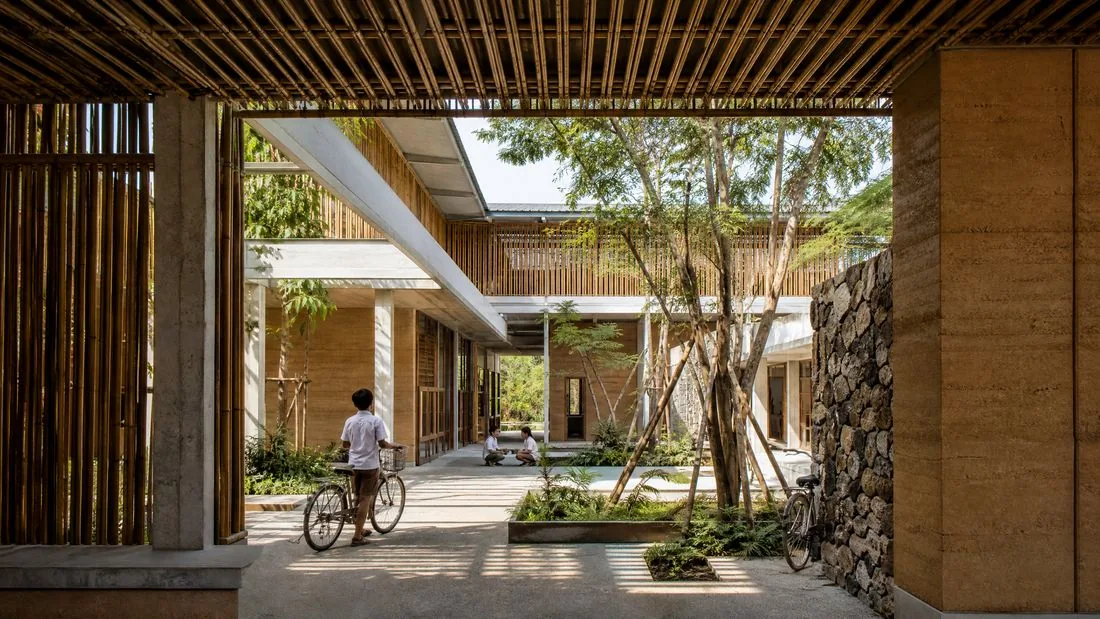
The renewal also extends to materials. Alongside concrete and steel, still dominant in large urban structures, studios such as Chiangmai Life Architects are proving that bamboo and rammed earth can meet the safety and design requirements of contemporary buildings, public ones included.
Bangkok's urbanism and quiet luxury
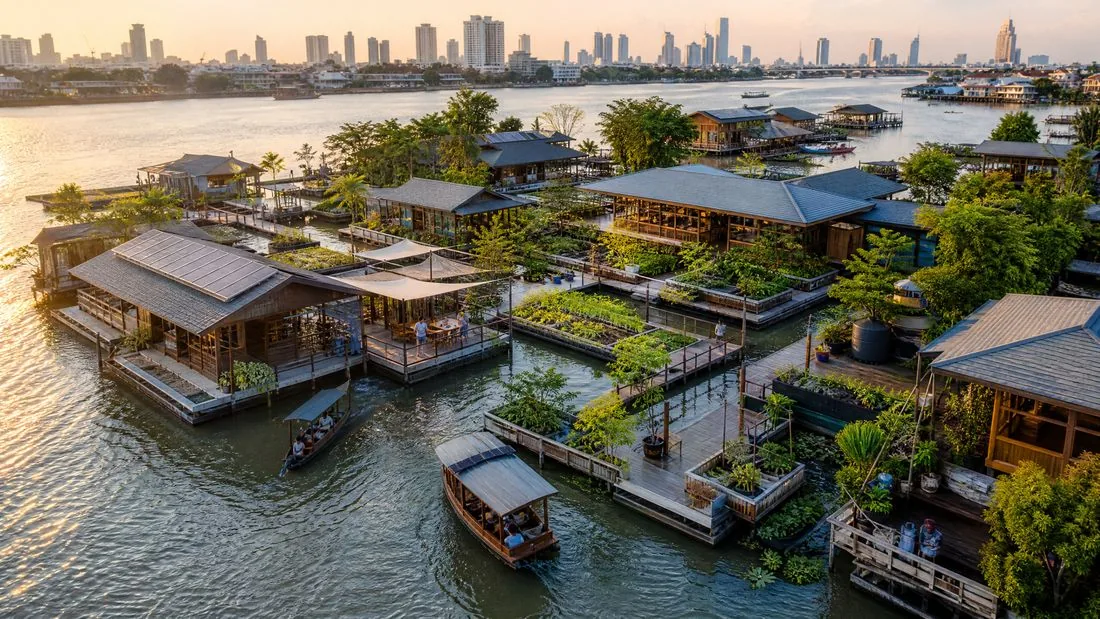
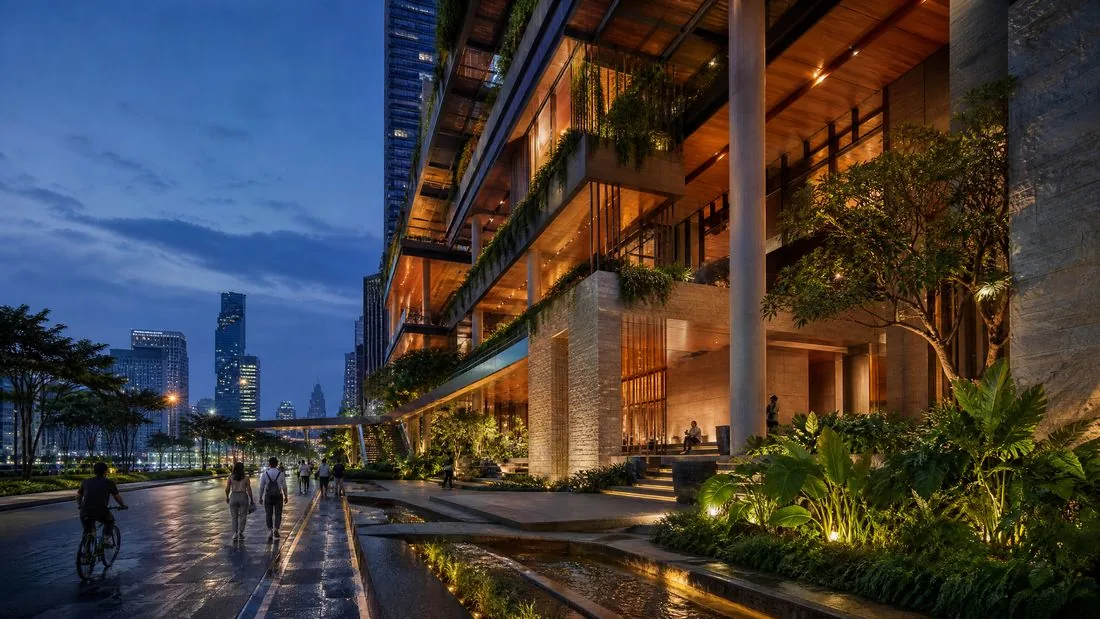
In Bangkok, this evolution meets a broader trend in the high-end residential market: "quiet luxury," where design longevity and material honesty outweigh ostentation. Large-scale projects such as One Bangkok illustrate this ambition to create "cities within the city," integrating vertical gardens and smart water management.
Conclusion
The challenge for the years ahead will be maintaining this balance between tradition and innovation amid rising land pressure and increasingly severe climate events, without ever losing sight of the fact that, in the tropics, modernity is measured as much by its sophistication as by its rootedness in place.