Journal
3D Printing and Construction Robotics
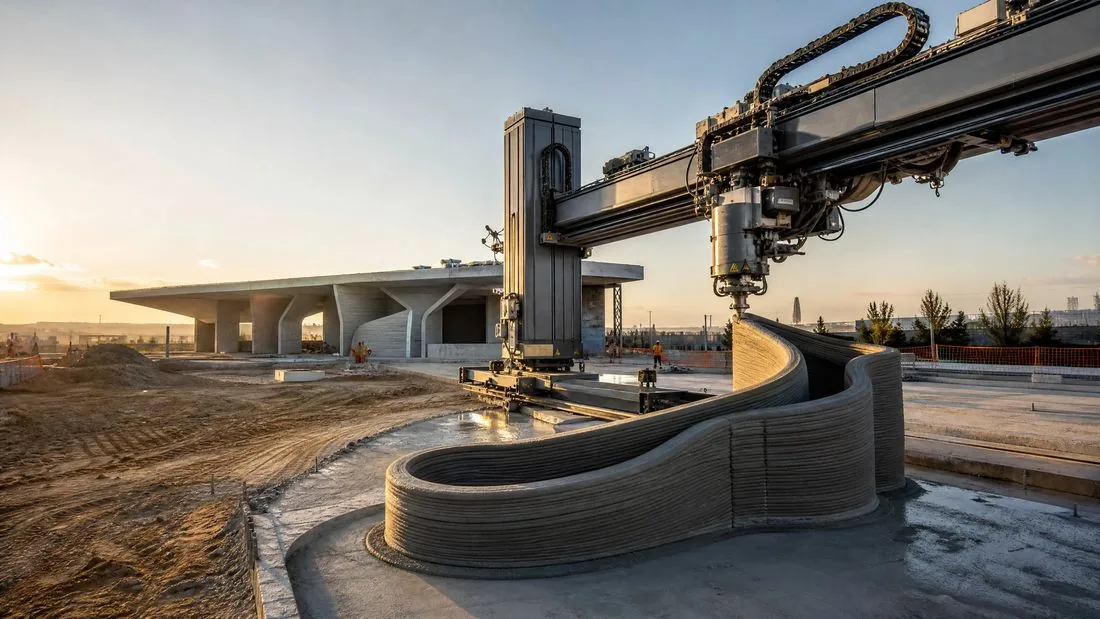
The construction sector, long one of the least digitised industries, is undergoing a rapid transformation. Driven by growth in the building 3D-printing market, automation is no longer a laboratory curiosity but a reality on construction sites worldwide, a shift redrawing the limits of architectural creativity while addressing efficiency and sustainability demands.
3D concrete printing: formal freedom in service of efficiency
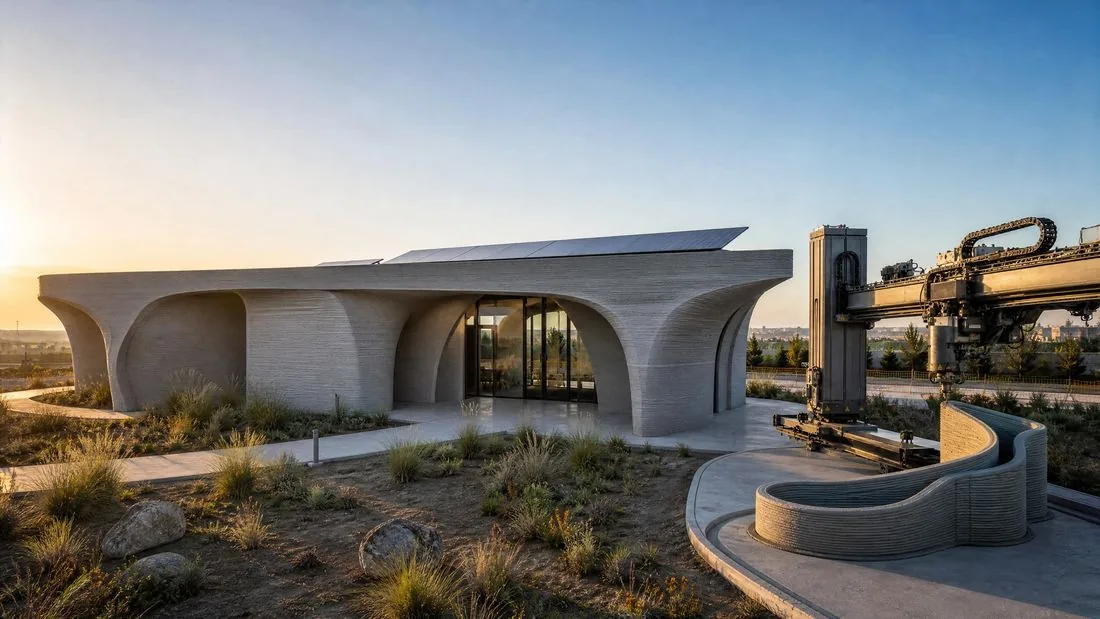
3D concrete printing makes it possible to build organic, fluid structures without the cost of traditional formwork. The technique offers high precision and significantly reduces material waste, since concrete is only deposited where structurally necessary, producing lighter, more efficient buildings. Beyond aesthetics, this approach is also emerging as a concrete response to the housing crisis, with entire neighbourhoods of homes printed within days, at a markedly lower cost than conventional methods.
Construction robotics: precision, safety and productivity
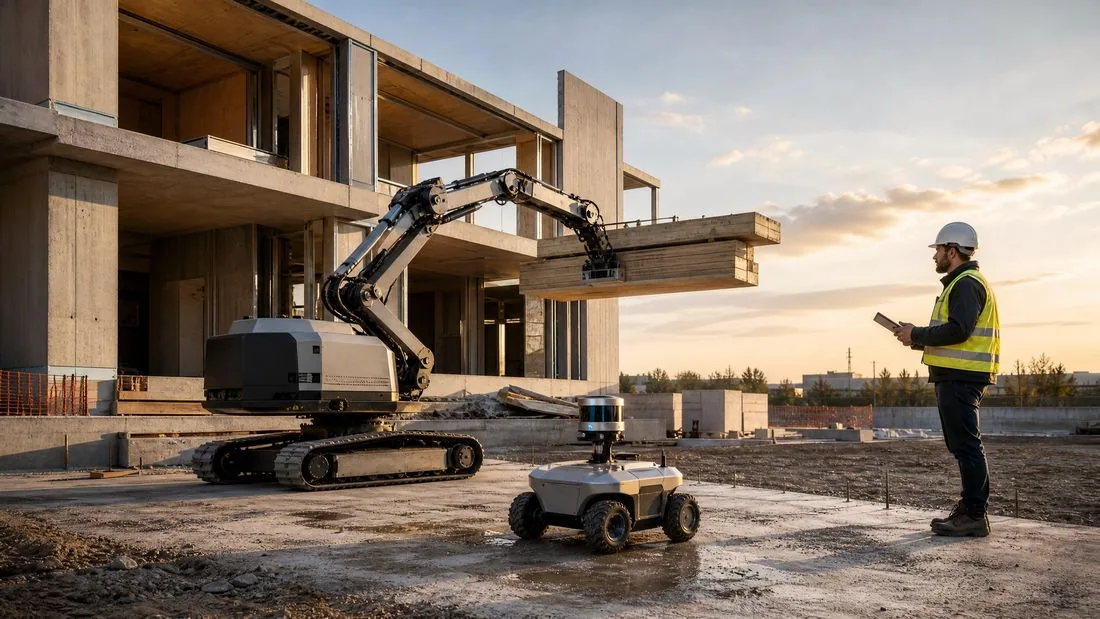
Alongside 3D printing, a new generation of robots is taking on the most gruelling or dangerous tasks on site, from laying bricks with perfect consistency to tracking construction progress by drone. This automation contributes to a notable rise in the sector's overall productivity, while reducing crews' exposure to the riskiest tasks.
Towards a new role for the architect
This automation doesn't replace the architect: it transforms the profession. Mastering generative design and programming tools is becoming as important as knowledge of materials: the architect becomes a technological conductor, able to configure algorithms to optimise a structure and oversee high-precision robotic execution. The real challenge remains human: the transition demands significant upskilling of construction crews, and regulatory frameworks still need to adapt to these new building methods.
Conclusion
3D printing and robotics mark architecture's entry into an era of personalised industrial fabrication. Building a structure is no longer just an act of masonry: it is now also a high-technology process, one that offers architects unprecedented creative freedom, with an efficiency and sustainability that could only be imagined a few years ago.