Journal
Architecture and Food Security
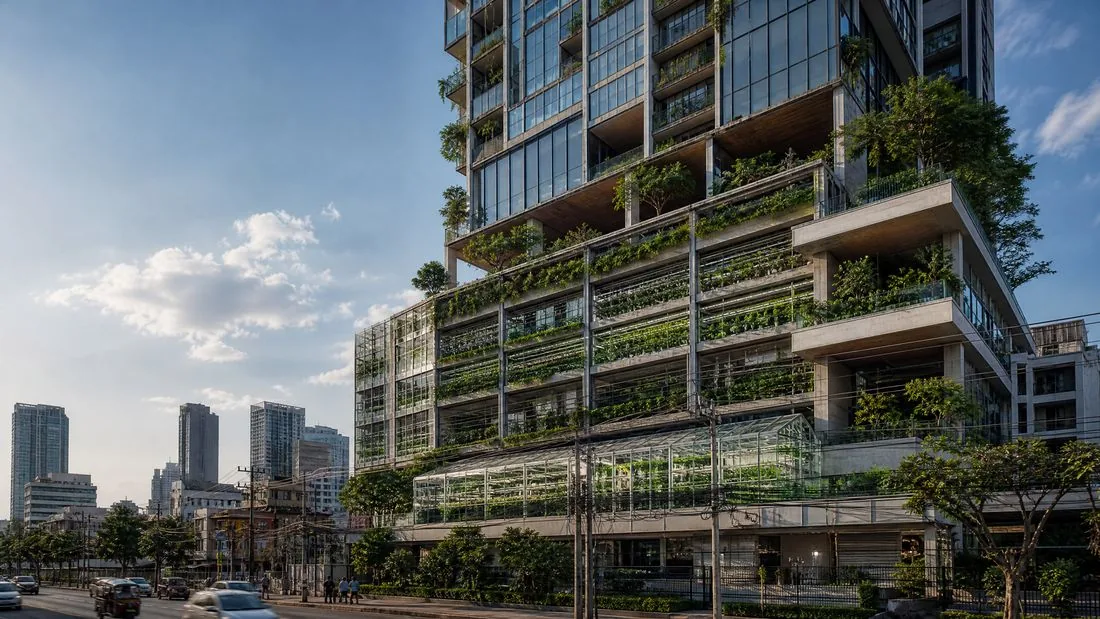
Faced with rampant urbanisation and recurring supply chain disruptions, the city can no longer settle for being a mere consumer of food resources. Building-integrated agriculture is emerging as a strategic component of contemporary architectural design: transforming built structures into productive vertical farms means actively contributing to residents' food security while optimising a building's energy cycles.
The vertical farm: a new programmatic function
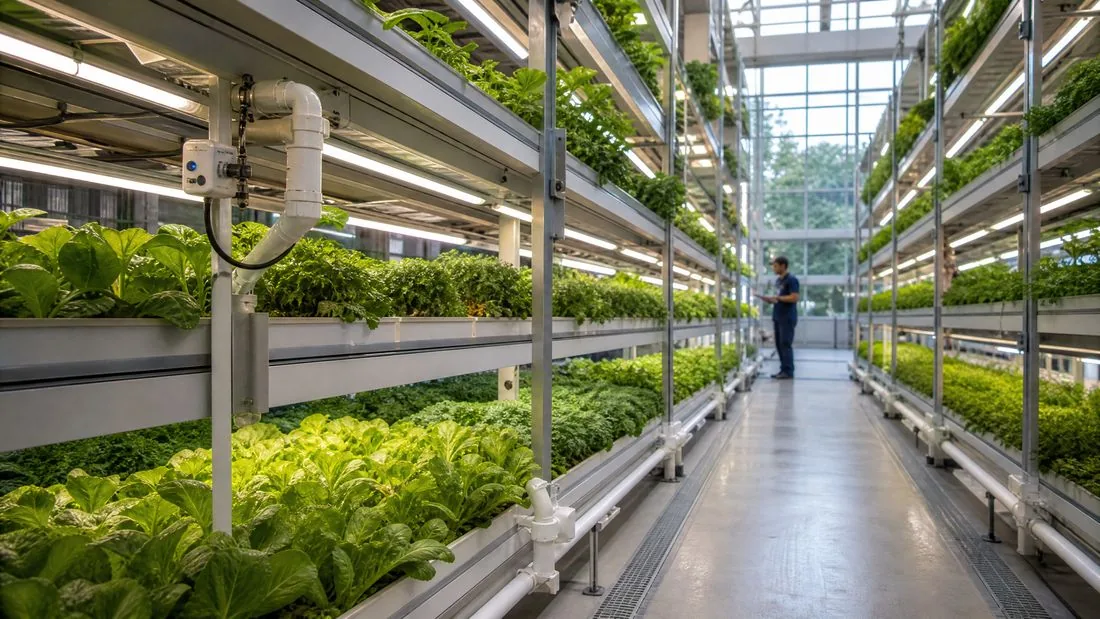
Integrating agriculture into a project is no longer an aesthetic or educational option: it has become a function in its own right, on a par with an office or a home. Hydroponic, aeroponic and aquaponic technologies enable unprecedented spatial efficiency, with yields per square metre far beyond traditional agriculture. The building itself becomes a resource for cultivation: waste heat from technical equipment recovered to warm greenhouses, greywater recycled for irrigation, CO2 exhaled by occupants captured to boost photosynthesis, organic waste composted on site to feed the next harvest.
Performance and yield: precision agriculture
Thanks to the Internet of Things and artificial intelligence, integrated vertical farms are reaching unprecedented levels of precision: every parameter (light spectrum, nutrient supply, humidity level) is controlled to guarantee consistent harvests, regardless of season or outdoor climate conditions. Powered by renewable energy, these systems significantly reduce the climate impact of food production, making urban agriculture a genuine component of the low-carbon city.
Social and urban impact: towards nourishing neighbourhoods
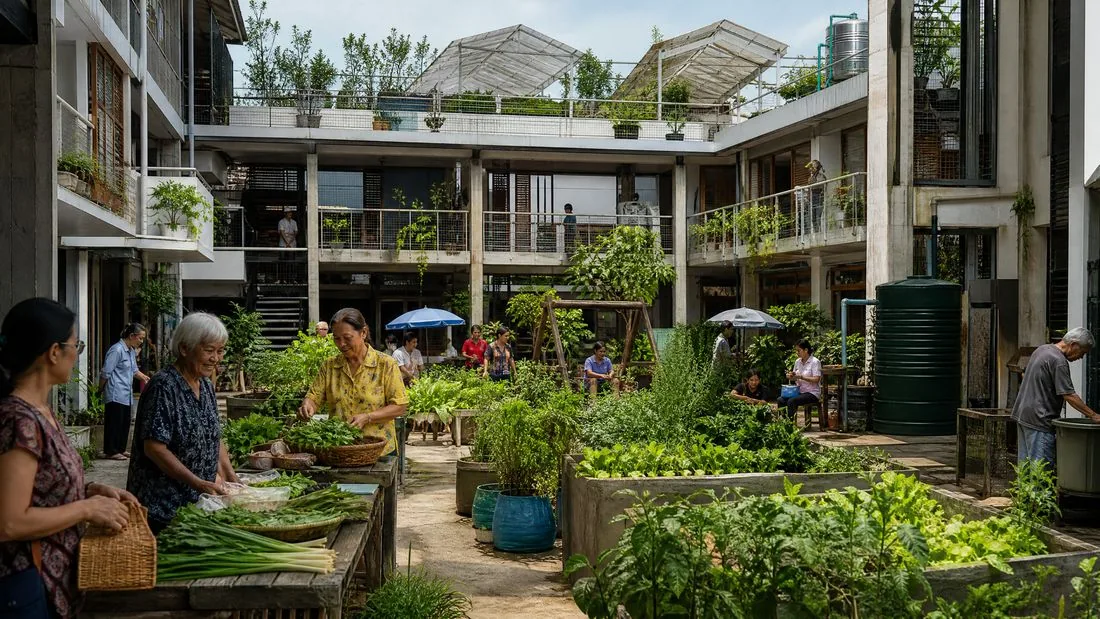
Beyond production, nourishing architecture transforms the social life of neighbourhoods. In Bangkok, several projects integrate vertical farms into intergenerational residential complexes, fostering the sharing of know-how and equitable access to fresh food. These spaces become meeting places as much as production sites, strengthening the social fabric against urban food deserts.
Conclusion
Integrating vertical urban agriculture into architecture gives rise to a metabolic building: one that produces part of what it consumes and recycles its own flows. This shift is not merely technical, it is ethical: it places vital production back at the heart of where we live, making every architect an actor in tomorrow's food sovereignty.