Journal
High-Tech Timber Architecture (Mass Timber)
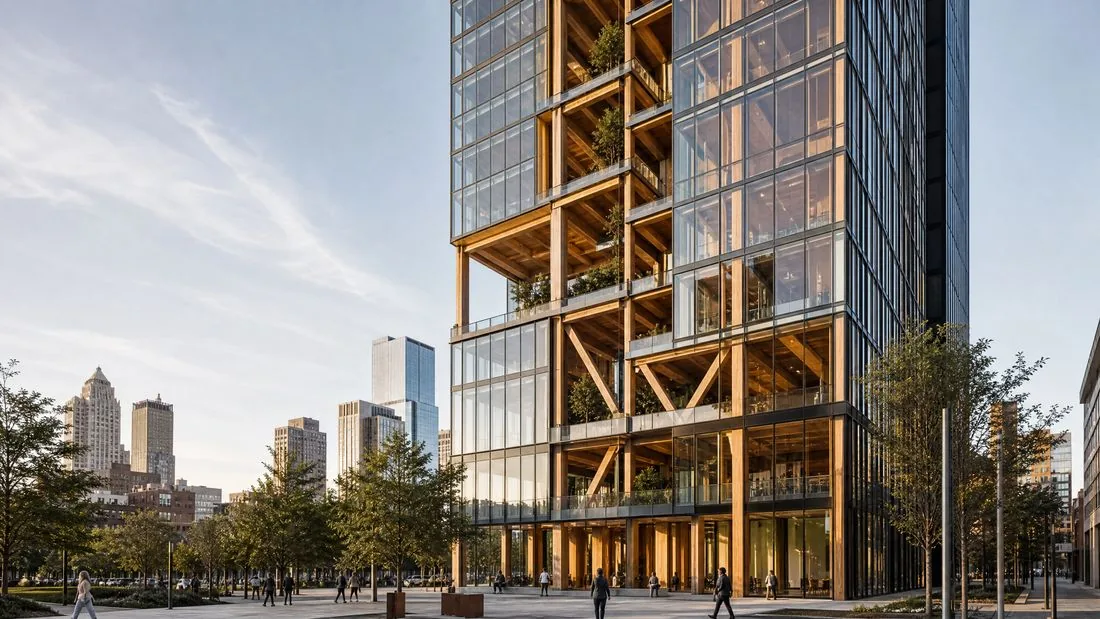
The construction industry, responsible for a major share of global greenhouse gas emissions, is undergoing a genuine structural revolution. Mass timber, high-tech engineered wood, is emerging as the most credible and aesthetic alternative to steel and concrete for tall buildings. Thanks to innovations in cross-laminated timber (CLT) and glue-laminated timber (glulam), wooden skyscrapers are no longer utopian ideas but realities reshaping skylines around the world.
CLT and glulam: the new steel of the 21st century
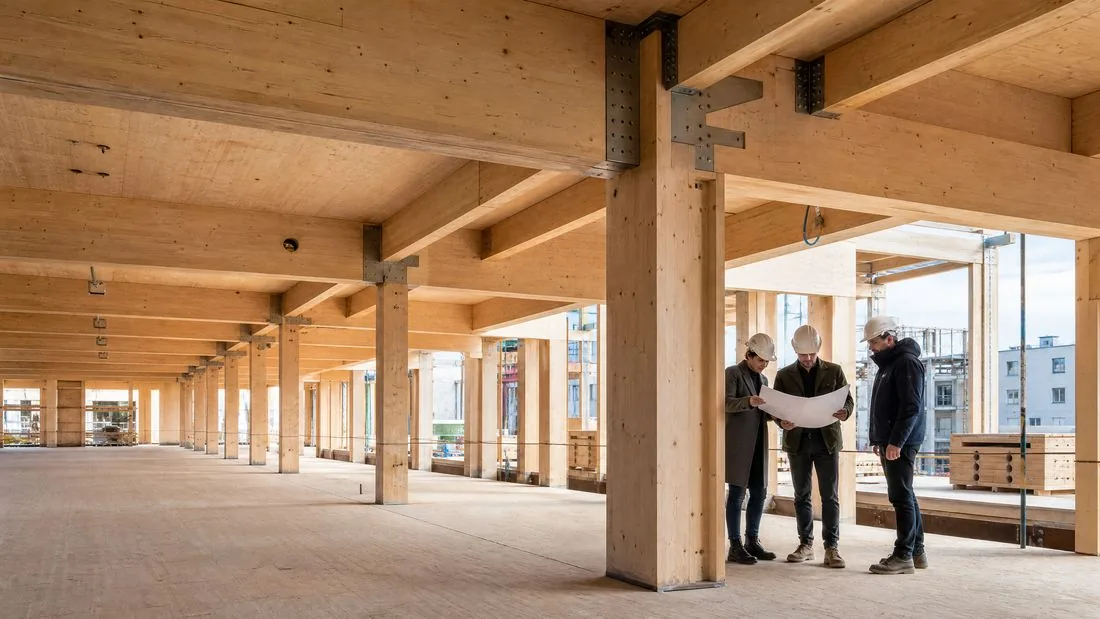
Mass timber relies on layers of wood bonded together to form panels and beams with structural strength comparable to steel, while being far lighter. These materials now make it possible to build structures beyond 25 storeys, an achievement unthinkable a decade ago for a material once seen as fit only for small-scale construction.
Decarbonisation through sequestration: an urban carbon sink
The major advantage of high-tech timber is its ability to act as a carbon sink. Unlike cement and steel, whose production is extremely energy-intensive, wood stores the carbon absorbed by the tree as it grows. Using timber from sustainably managed forests, every mass timber building contributes to decarbonising the city, significantly reducing the global warming potential linked to its construction.
Technical challenges and seismic resilience
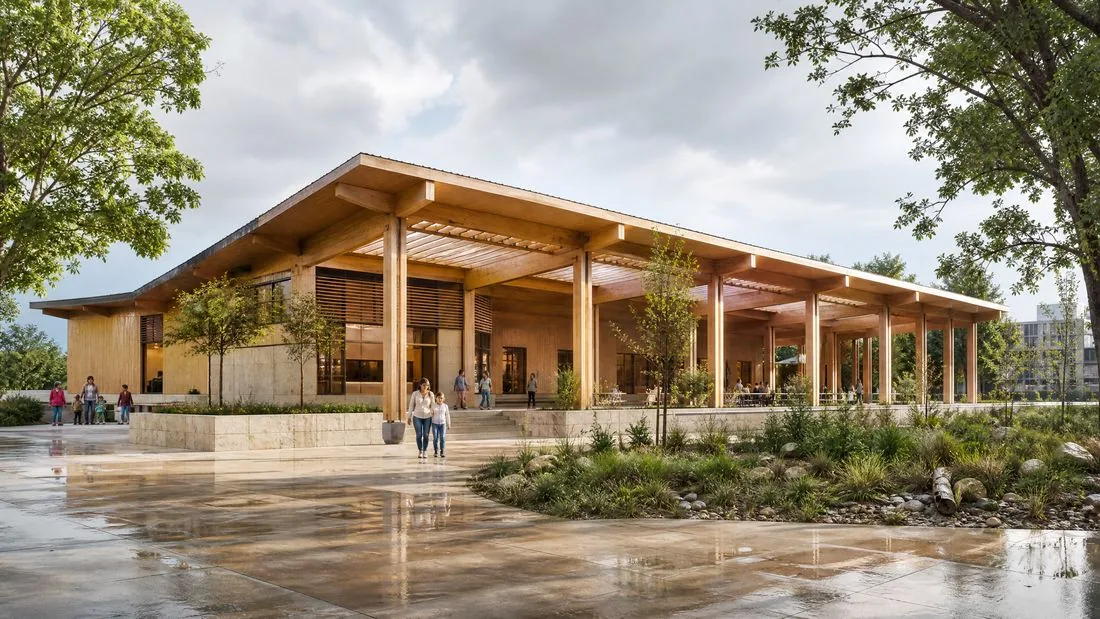
Large-scale shake-table research has demonstrated the exceptional resilience of timber towers against earthquakes. The natural flexibility of wood, combined with innovative connection systems, allows structures to dissipate seismic energy more effectively than rigid concrete structures, a serious avenue for high-risk zones such as the Pacific Ring of Fire.
Conclusion
Mass timber architecture marks the return of wood as a noble, technological material. By combining industrial performance with ecological sensitivity, architects are giving cities back an organic, sustainable dimension. Wooden skyscrapers are not merely feats of engineering; they are symbols of a civilisation learning to build with nature rather than at its expense.