Journal
Resilient and Floating Architecture
As sea level rise accelerates, cities such as Bangkok find themselves on the front line. With a very low average elevation, the Thai capital has become a testing ground for an emerging discipline: resilient and floating architecture, which no longer seeks to hold water back with levees but to integrate it as a genuine component of urban design.
From a sinking city to a floating one
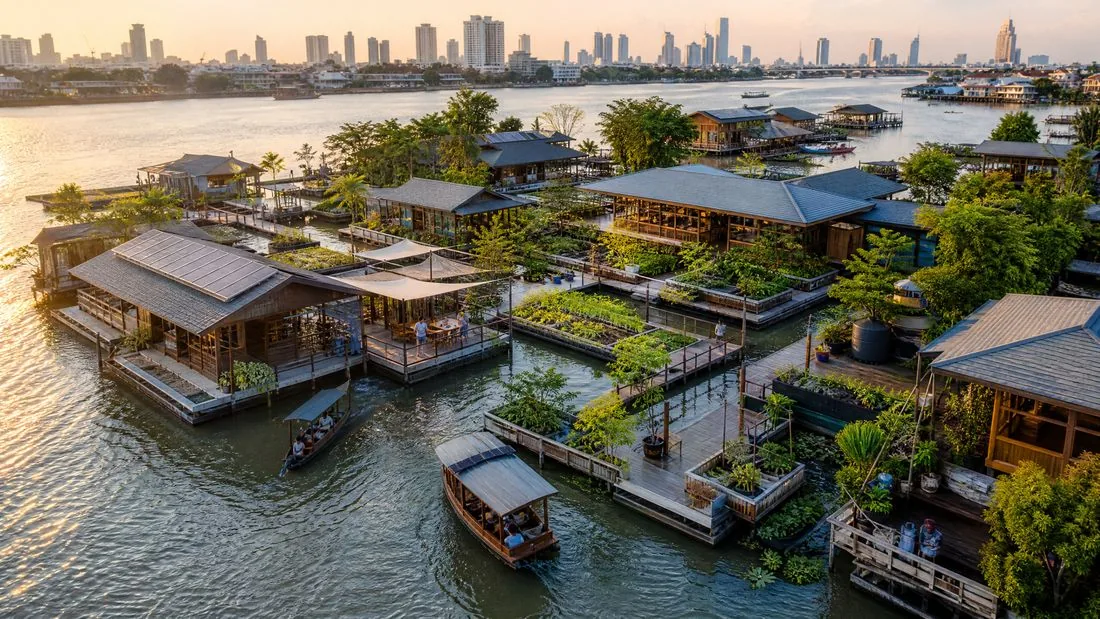
Bangkok subsides a little further each year, a situation worsened by the weight of towers and groundwater extraction. Two approaches are emerging in response: amphibious structures, which normally rest on the ground but rise during flooding thanks to hollow foundations acting as pontoons; and floating neighbourhoods, inspired by traditional lake-dwelling villages, made up of interconnected modules able to adapt to tides while generating their own energy.
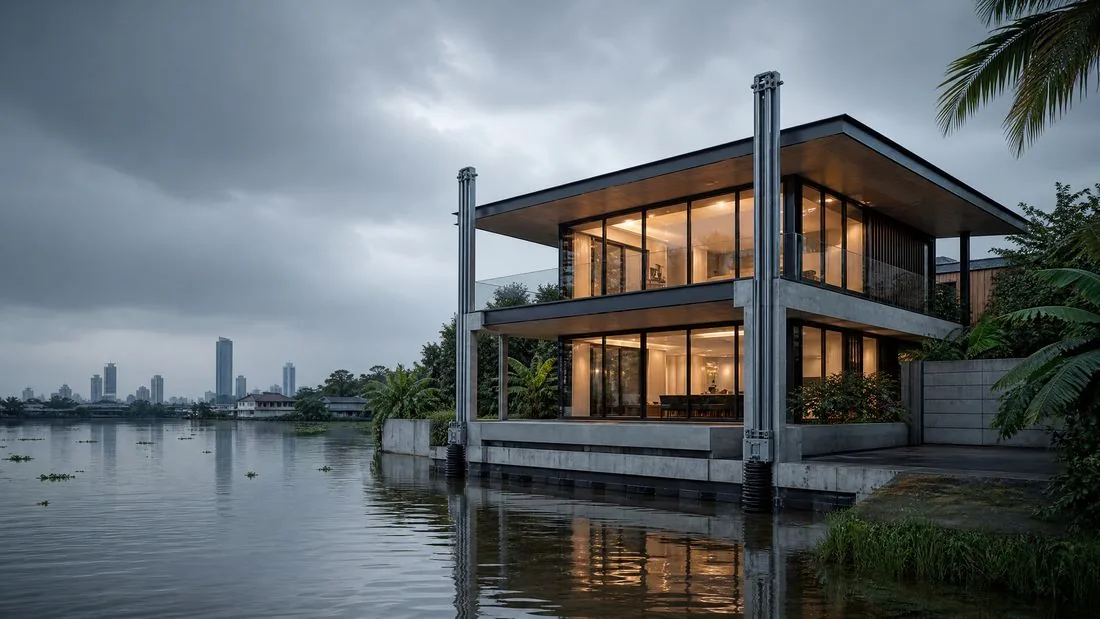
Technical principles and resilient materials
Designing resilient architecture requires a rigorous selection of materials able to withstand saline corrosion and constant humidity. Strategies typically combine passive buoyancy from sealed caissons, vertical guidance via telescopic posts that keep the building in place during flooding, energy autonomy through solar panels or hydro turbines, and wastewater management through phytoremediation, using plants and bio-filters that naturally purify water.
Pilot projects in Thailand
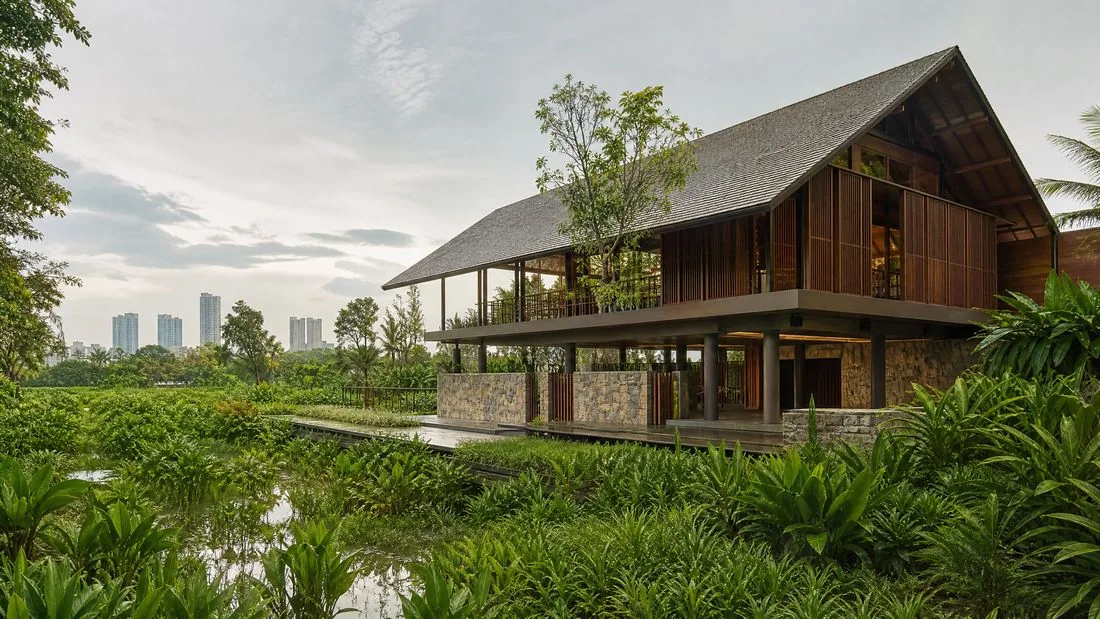
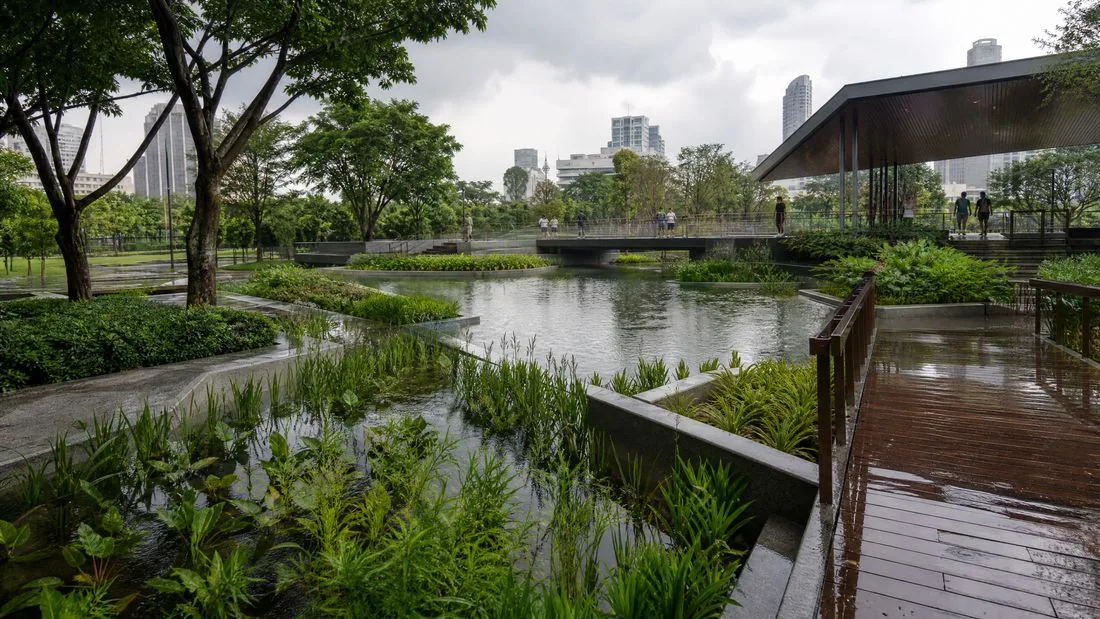
Several pilot projects in Thailand already demonstrate the viability of this approach, combining local timber such as teak for the structure with lightweight foundations in protected expanded polystyrene. At the urban scale, certain retention parks designed as genuine resilient landscapes can store large volumes of rainwater to relieve the municipal network during heavy rain events.
Conclusion
Resilient architecture is no longer a futuristic option but a necessity for the survival of coastal areas. By turning the threat of water into a design opportunity, architects are creating fluid, self-sufficient spaces in harmony with natural cycles rather than fighting against them.